Rotted Railings & Guardrails
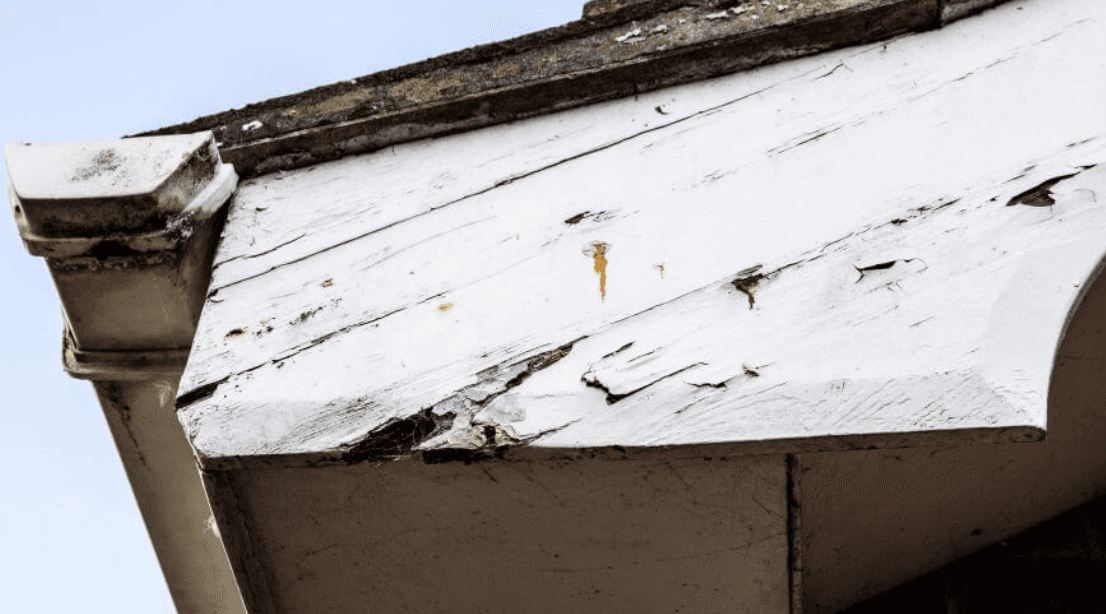
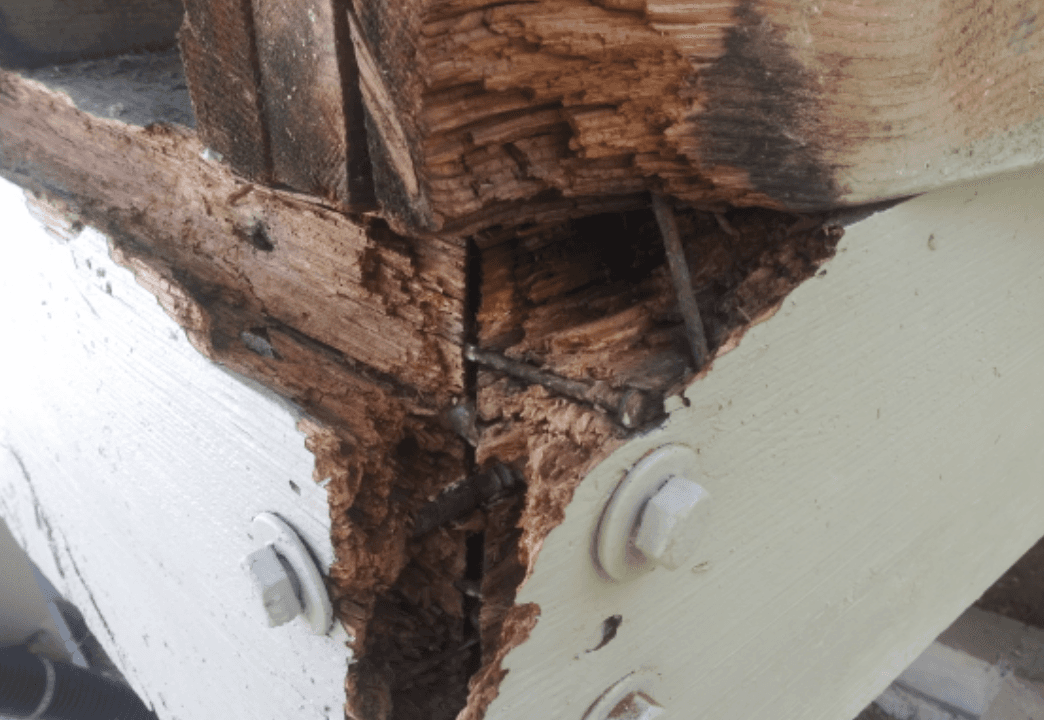
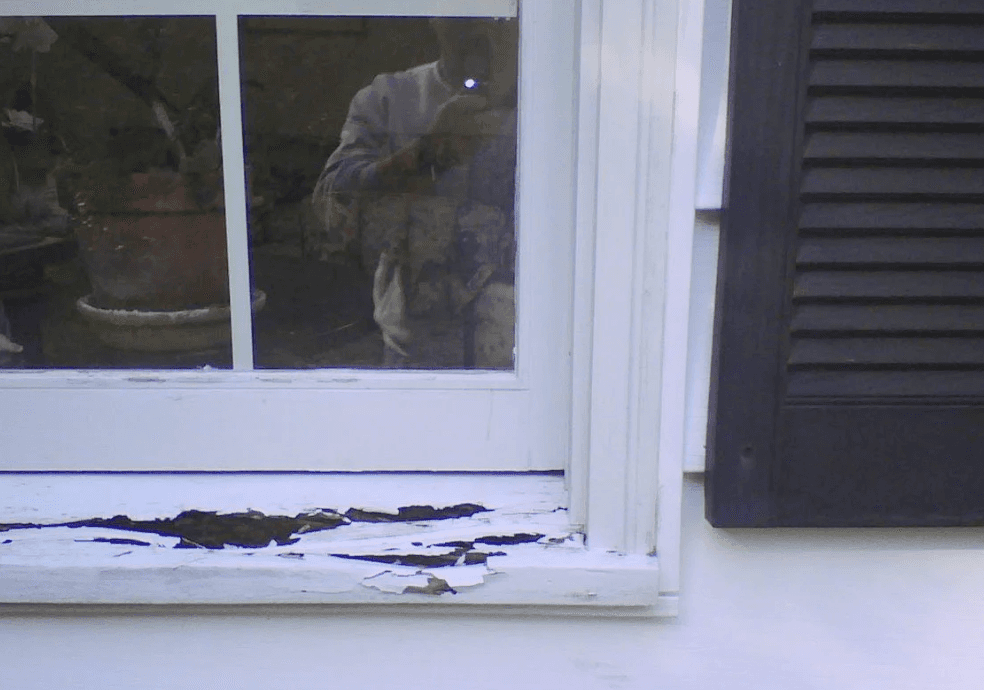
Railings and guardrails are highly exposed to moisture at post bases, fasteners, and horizontal joints. Over time, water intrusion causes wood to soften, loosen, and lose structural integrity—creating both safety risks and code concerns.
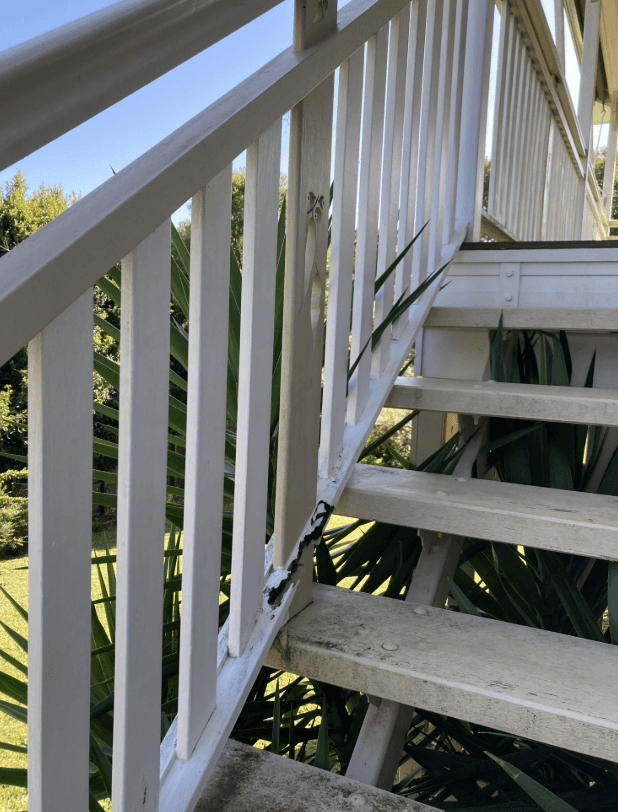
Railings & Guardrails
Railings and guardrails are among the most frequently touched and visually noticeable elements of a deck or exterior stair system. Because they are exposed to weather and subject to constant movement and stress, they are also common locations for dry rot to develop—often creating safety concerns before structural damage is obvious.
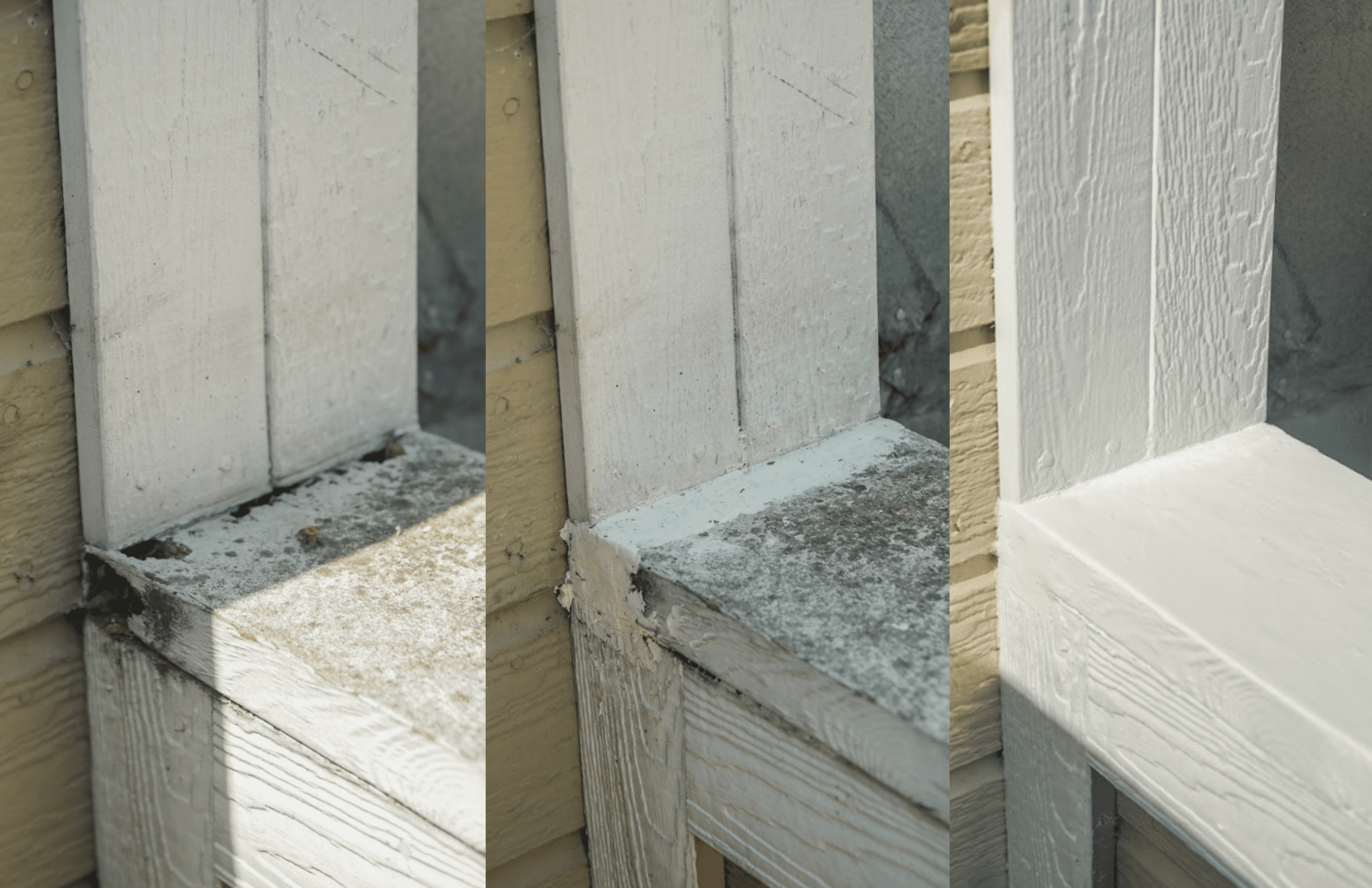
Dry rot in railings typically begins at connection points, including post bases, fasteners, and horizontal joints where water collects. Over time, moisture penetrates through small cracks, failed sealants, or unprotected end grain. As the wood weakens, railings may begin to feel loose or unstable, even if surface damage appears minimal.
Guardrails are designed to provide safety and meet specific code requirements. When rot compromises these components, it can create liability risks in addition to structural issues. In coastal environments, frequent exposure to fog, rain, and salt air accelerates deterioration, especially in older railing systems built without modern moisture-management details.
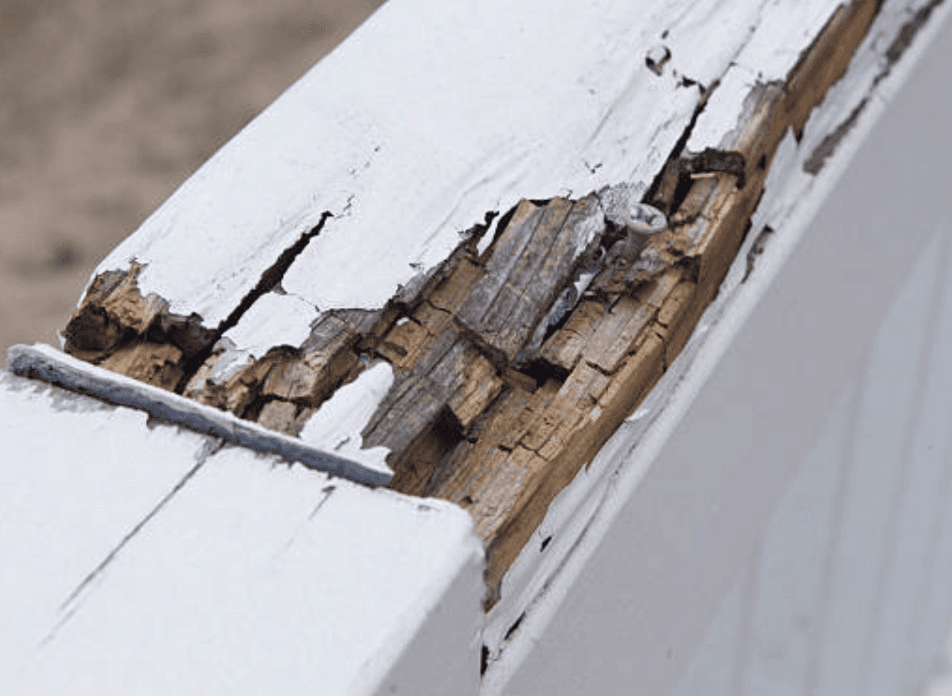
The Challenge
One challenge with railing rot is that damage often spreads beyond the visible section. A rotted rail may be connected to a post or stair stringer that is also compromised. Because railing systems are interconnected, failure in one area can affect the stability of the entire assembly.
Professional inspection focuses on identifying both visible and hidden deterioration. This includes evaluating post stability, fastener integrity, and the condition of joints and transitions. Determining whether the issue is isolated or part of a larger moisture problem helps guide appropriate repairs.
Repairing rotted railings requires more than surface patching. Compromised components must be removed and replaced, and underlying moisture issues addressed to prevent recurrence. Proper repairs restore safety, improve appearance, and ensure compliance with current building standards.
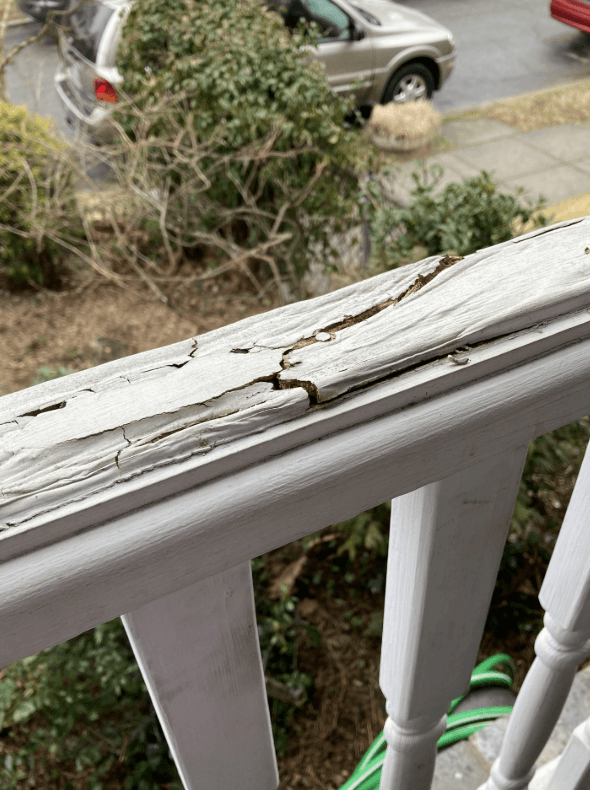
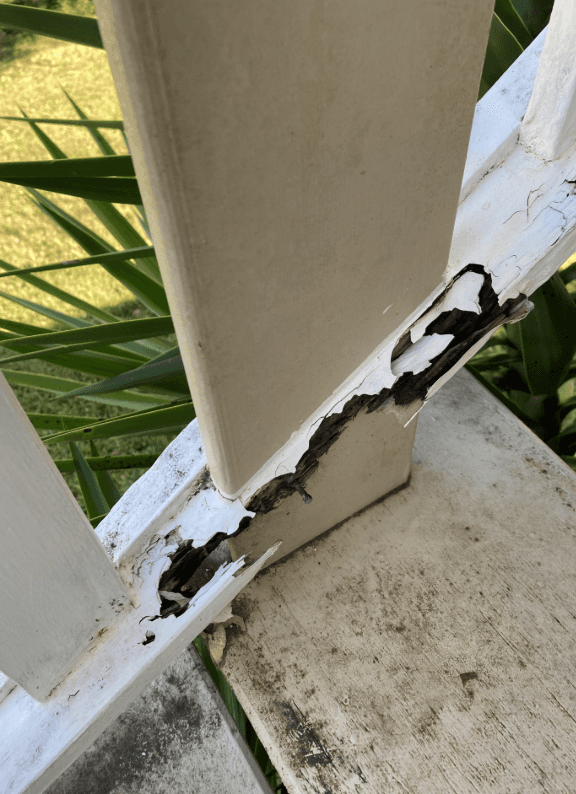
More Projects